
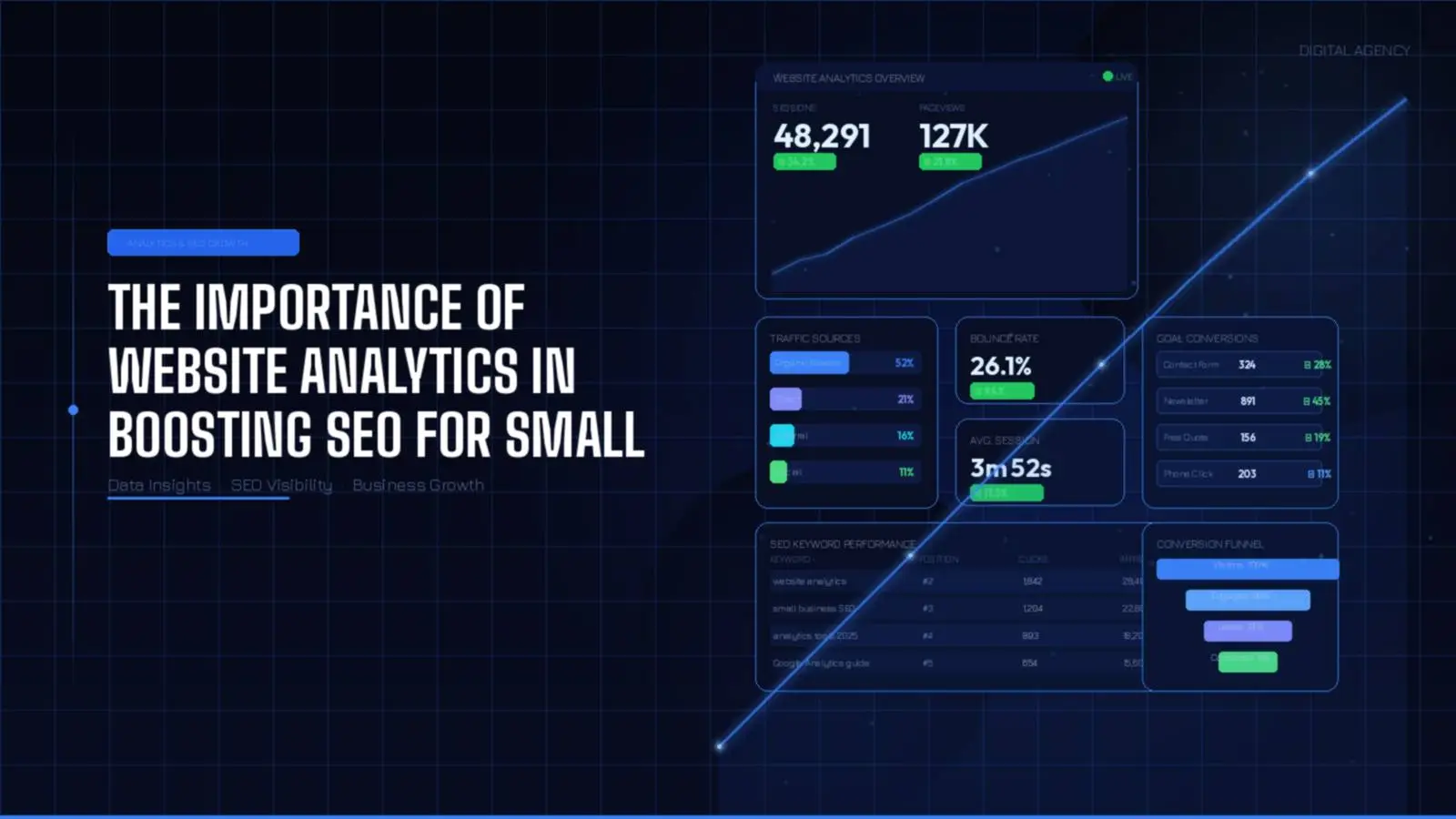
You work hard on Your Website… but are you sure it’s actually bringing you customers? With the right analytics in place, you can finally see what’s working, what’s wasting your time, and how to sharpen your seo for a small business strategy so your ideal clients find you faster.
Why Website Analytics Matter for SEO for Small Businesses
When you Run a small business, every click, visit, and form fill needs to count. Website analytics show you how people find you, what they do on your site, and where they drop off, so you can make smarter decisions instead of guessing.
By tying your data to seo for small business goals (like more calls, bookings, or quote requests), you stop chasing vanity metrics and start focusing on actions that actually bring revenue.
How Analytics Turn Guesswork into Clear SEO Insights
Without data, it’s easy to assume you know what your visitors want. With analytics, you can see real seo insights about which pages people land on, how long they stay, and which content leads to conversions.
Over time, this helps you understand which keywords, pages, and offers attract your best customers, so you can double down on what works and trim what doesn’t.
Key Metrics That Show Your SEO Performance Tracking
If you want your seo for small business strategy to improve month after month, you need consistent seo performance tracking. Here are the core metrics to watch:
- Organic traffic: How many visitors come from search engines?
- Click-through rate (CTR): How often people click your result when they see it in Google.
- Bounce rate: How many visitors leave after viewing only one page.
- Pages per session: How many pages people view before leaving.
- Conversions: Form fills, calls, bookings, or sales from organic traffic.
Tracking these regularly helps you spot patterns and react quickly when something dips or spikes.
Using Analytics for Small Business to Find Your Best Pages
Not every page pulls its weight. With analytics for Small Businesses, you can quickly see which pages attract the most organic traffic and which pages actually generate leads or sales.
Once you identify those “hero” pages, you can:
- Improve their content and calls-to-action to squeeze out more conversions.
- Add internal links from weaker pages to your top performers.
- Model new content after what’s already winning.
This approach makes seo for small businesses more efficient because you’re Building around proven winners instead of starting from scratch every time.
Turning Website Data into Stronger Content and Keywords
Website analytics tell you which search terms, topics, and pages resonate most with your audience. That means you can adjust your content to better match what real people are actually typing into Google.
For example, if you notice a blog about beginner tips getting high traffic and strong engagement, you can:
- Create follow-up posts that go deeper into that topic.
- Add a related lead magnet or offer on that page.
- Reuse the same themes in your service pages to boost seo for small businesses across your site.
Over time, this builds a content library that’s aligned with real demand, not just guesses.
How Website marketing analytics Reveal Visitor Behavior
Website marketing analytics go beyond just page views. They show you how users move through your site and where they get stuck or lose interest.
Here are a few powerful ways to Use Them:
- See which page most visitors land on first and optimize it as a strong “first impression”.
- Track the most common paths users take (for example: blog → service page → contact form).
- Identify pages with high exit rates and improve content, layout, or calls-to-action.
These insights help you design smoother journeys that align with your seo for small business goals.
Boosting Local Visibility with Better SEO for Small Businesses
If you serve local customers, analytics can show how well your Local SEO for small businesses is paying off. You can see which locations drive the most traffic and which pages bring in local leads.
By combining location data with seo insights, you can:
- Create or refine location-specific pages.
- Adjust content to use more local phrases and questions.
- Test different calls-to-action based on how local visitors behave.
This is especially powerful when combined with professional support from an agency that specializes in seo for small businesses and local growth.
Using Analytics to Improve User Experience (and Rankings)
Search engines reward sites that offer a great user experience. When your pages load fast, are easy to navigate, and provide clear value, visitors stay longer and engage more, which supports stronger seo for small business results.
Analytics highlight UX issues like slow pages, high bounce rates, and low engagement. Once you see those red flags, you can fix them and watch both user satisfaction and organic traffic improve over time.
Connecting Campaigns, Content, and Website Marketing Analytics
Your website doesn’t exist in a vacuum. Email campaigns, social posts, and paid ads all drive traffic that affects your seo for business performance.
By using website marketing analytics to track where visitors come from and how they behave once they land on your site, you can:
- See which channels bring the most qualified visitors.
- Refine your messaging so search, social, and email tell a consistent story.
- Spot opportunities to repurpose high-performing SEO content in other channels.
This integrated view makes your entire marketing ecosystem more efficient and profitable.
When to Get Expert Help with SEO for Small Business
Handling analytics, content, and optimization on your own can be overwhelming, especially when you’re also running the business. That’s where expert partners can step in and help you unlock deeper seo insights without drowning in data.
If you want a more strategic, data-driven approach, working with a dedicated business partner can help you:
- Set the right tracking and goals.
- Build a roadmap based on real numbers, not assumptions.
- Continually refine your seo performance tracking so results keep improving.
Simple Steps to Start Using Analytics Today
You don’t need to become a data analyst to get value from analytics. Start small and build up as you get more comfortable. Here’s A Simple path:
- Set up basic tracking with a reliable analytics tool.
- Define 2–3 core goals (calls, form fills, bookings) linked to seo for small business.
- Check your top landing pages and see which gets the most organic traffic.
- Improve those pages with clearer headlines, stronger calls-to-action, and helpful content.
- Review your seo performance tracking each month and make one or two focused tweaks.
Small, consistent improvements driven by data add up to big gains over time.
Conclusion
When you rely on guesswork, seo for small businesses feels confusing and unpredictable. When you lean on website analytics, you gain clarity about what’s working, where you’re losing potential customers, and which changes will make the biggest impact.
By using analytics for small businesses to guide your content, user experience, and marketing decisions, you turn your website into a reliable growth engine. If you ever feel stuck or unsure what to do next, that’s a sign to revisit your numbers, or to bring in a trusted seo for small business partners to help you translate data into results.
Learn more about SEO and AEO services.