
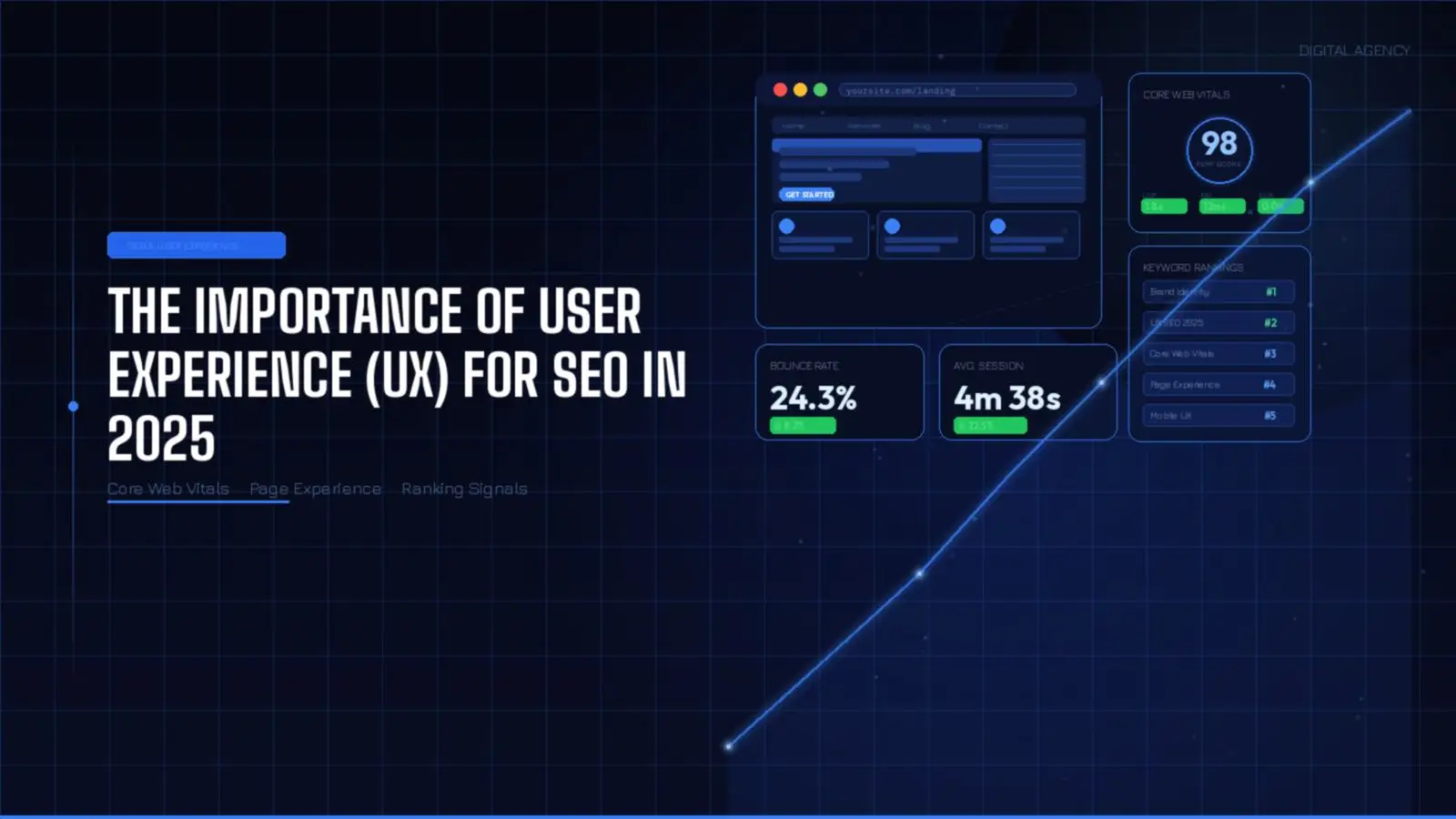
Right now, it’s not enough to just “rank on Google” and hope people stick around. In 2025, user experience and seo are deeply connected, and search engines can see how users behave on your site. If you want more traffic, more leads, and more sales, focusing on how your site feels to real people is one of the smartest moves you can make.
What User Experience and SEO Really Mean Today
When you think about user experience and seo, you’re looking at two parts of the same journey.
- SEO helps people find Your Website in search results.
- UX decides whether they stay, explore, and take action.
Search engines watch signals like bounce rate, time on page, and return-to-search behavior, so your user experience seo choices directly influence how well you rank.
Why User Experience and SEO are Inseparable in 2025
Modern algorithms are built to reward sites that genuinely help users, not just pages that repeat keywords. When visitors feel your site is fast, clear, and helpful, they naturally interact more, which sends strong positive signals back to search engines.
That’s why ux and seo are no longer separate checklists. Good SEO brings the right visitors in, and good UX turns those visitors into engaged readers, leads, and customers.
How Core Web Vitals Connect User Experience and SEO
Core Web Vitals are Google’s way of measuring real-world page experience, and they sit right at the intersection of user experience and seo. They focus on how quickly your content loads, how stable it is, and how responsive the page feels.
The key metrics include:
- Largest Contentful Paint (LCP): How quickly the main content appears.
- Interaction to Next Paint (INP): How fast the page responds to clicks and taps.
- Cumulative Layout Shift (CLS): How much the layout jumps while loading.
Improving these metrics makes your site feel smoother for users and strengthens your user experience seo foundation at the same time.
Mobile-first: Where UX and SEO Meet on Small Screens
Most people now search on their phones, and search engines use your mobile site as the main version for indexing. If the mobile experience is poor, both your rankings and website user experience will suffer.
To align mobile UX with user experience and seo, focus on:
- Responsive layouts that adapt to any screen size.
- Buttons and links that are easy to tap without zooming.
- Fonts and spacing that are readable on smaller screens.
A strong mobile experience is now a basic requirement for effective user experience seo.
Clear Navigation That Helps Users and Search Engines
Navigation is one of the simplest ways to improve ux and seo together. When your menus are clear, and your internal links are logical, users find what they need faster, and crawlers understand your site structure better.
Strong navigation usually means:
- Simple, descriptive menu labels.
- Important pages are reachable within a few clicks.
- Helpful internal links inside your content pointing to services, guides, or FAQs.
For example, if you offer optimization help, linking naturally from educational content to a page like your core seo services keeps people moving toward solutions while supporting user experience and seo goals.
Content That Satisfies Both Humans and Algorithms
Search engines want to show content that actually answers people’s questions clearly and completely. That means your user experience depends on more than hitting a keyword target; it’s about structure, clarity, and depth.
To align content with user experience and seo:
- Start by understanding the searcher’s real intent.
- Use helpful headings, short paragraphs, and bullet points for easy scanning.
- Place your primary and secondary keywords where they fit naturally, not forced.
When your content genuinely helps, people stay longer, share more, and are more likely to convert, boosting your ux and seo performance in the process.
Engagement Signals: How Behavior Influences Rankings
Search engines can’t “see” your design, but they can analyze user behavior. This is where user experience and seo strongly overlap, because engagement metrics act as a proxy for satisfaction.
Key signals include:
- Time on page and scroll depth.
- Clicks to other internal pages.
- How often users bounce quickly back to search results.
By improving website user experience with clearer layouts, relevant content, and meaningful next steps, you encourage behaviors that tell search engines your site deserves to rank.
Trust, Credibility, and User Experience and SEO
In 2025, trust is a big ranking and conversion factor, and it’s directly tied to user experience and seo. Visitors want to feel safe, informed, and confident before they give you their time or money.
You can build trust by:
- Using HTTPS and clear privacy information.
- Providing complete contact, about, and service details.
- Showing testimonials, reviews, or case studies.
Pages that clearly communicate credibility make your user experience seo stronger by combining expertise with a reassuring on-site experience.
Accessibility: Better for People and Rankings
Accessibility improvements often benefit everyone, not just people using assistive technologies. Good accessibility practices also support technical and semantic SEO, making the website user experience more inclusive and search-friendly.
Examples include:
- Descriptive alt text on images.
- Proper heading hierarchy (H1, H2, H3) for screen readers and crawlers.
- Sufficient color contrast and keyboard-friendly navigation.
These changes enhance ux and seo together by making content easier to understand for both humans and search engines.
Calls to Action That Feel Natural
Calls to action are part of real-world user experience and seo because they guide visitors toward meaningful outcomes. The best CTAs feel like the natural next step, not a pushy demand.
For example, after explaining key UX and SEO concepts, inviting someone to explore specialized seo services feels like a helpful option rather than a hard sell. Well-placed CTAs improve engagement and conversions, directly supporting your seo user experience.
Practical Steps to Improve User Experience and SEO
If you want to act quickly, start with high-impact changes that boost user experience and seo at the same time.
You can:
- Speed up your site by compressing images, cleaning unused scripts, and improving hosting.
- Simplify your navigation and add relevant internal links.
- Refresh key pages with clearer headings, stronger intros, and better formatting.
- Test website user experience on different devices to spot issues you might miss on desktop.
Even a handful of focused improvements can make your site noticeably easier and more enjoyable to use.
When to Bring in Expert Support
You can make a lot of progress on your own, but deeper user experience and seo work often benefit from experienced guidance. A specialist or agency can audit your current setup, prioritize fixes, and Create a roadmap that ties UX and SEO efforts directly to leads and revenue.
If you feel ready for a structured approach, partnering with a team that offers strategic seo services can help you move faster, avoid costly mistakes, and get more value from every change you make to your site.
Conclusion
In 2025, user experience and seo are essentially one strategy with two perspectives. When you Build a site that loads quickly, feels intuitive, answers questions clearly, and earns trust, search engines notice, and so do your visitors.
Frequently Asked Questions About User Experience and SEO
How does user experience affect SEO rankings?
Google measures how people interact with your site through Core Web Vitals, bounce rate, and time on page. Sites that load fast, display correctly on mobile, and keep visitors engaged rank higher than slow or confusing sites. Good UX and good SEO go hand in hand.
What are the most important UX factors for SEO in 2025?
Page speed, mobile responsiveness, clear navigation, and Core Web Vitals scores (LCP, FID, CLS) are the top factors. Sites that score well on these metrics earn higher rankings and lower bounce rates. Accessibility and clean site architecture also play an increasing role.
Can improving UX alone boost your search rankings?
UX improvements support SEO but do not replace it. You still need quality content, proper keyword targeting, and authoritative backlinks. The strongest results come from combining Technical SEO fundamentals with excellent user experience design.
Learn more about SEO and AEO services.