
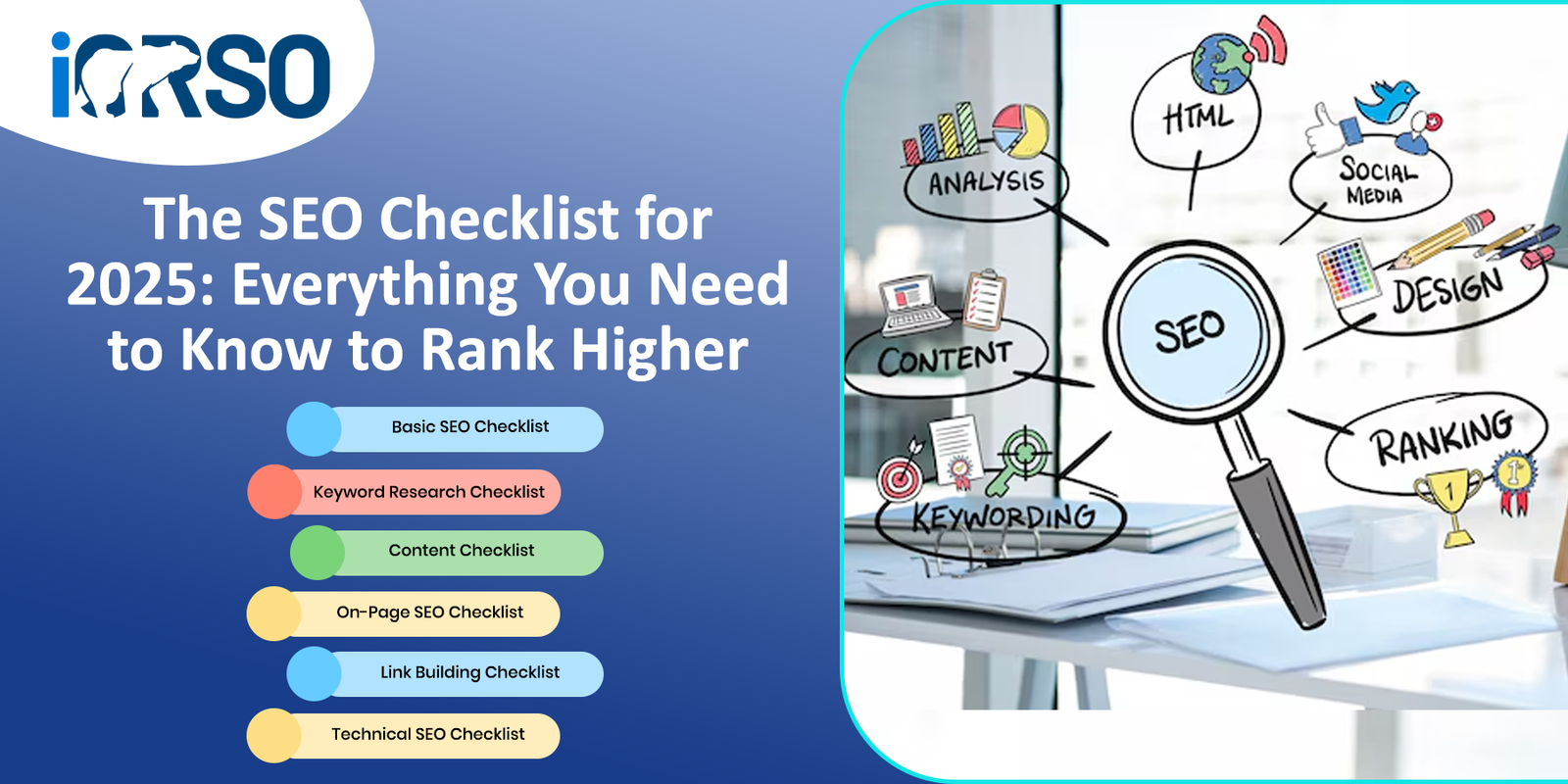
Introduction
SEO is constantly evolving, and what worked last year might not work today. Google’s algorithms are getting smarter, and ranking higher requires a strategic, data-driven approach. If Your Website Isn’t optimized for the latest SEO trends, you’re losing valuable traffic, leads, and revenue.
This SEO checklist for 2025 will walk you through the essential steps to improve your search rankings, attract more organic traffic, and stay ahead of the competition.
- Keyword Research: Find what your Audience is Searching For
Keyword research is still the foundation of SEO, but it’s no longer just about finding high-volume keywords, it’s about understanding search intent.
How to Optimize Your Keyword Strategy in 2025
- Use AI-Powered Keyword Research Tools – Use tools like Ahrefs, SEMrush, and SurferSEO to find high-converting keywords.
- Target Long-Tail & Conversational Keywords – With Voice Search on the rise, optimize for natural language queries.
- Focus on Search Intent – Understand whether a keyword is informational (how-to), navigational (brand search), transactional (buy now), or commercial (best product reviews).
- Analyze Competitor Keywords – Use tools to identify gaps and opportunities in competitor rankings.
Pro Tip: Optimize for semantic search by including related terms, synonyms, and topic clusters to help Google understand content contextually.
- On-Page SEO: Optimize Every Page for Search
Once you have your keywords, you need to optimize your pages for both search engines and users.
On-Page SEO Checklist
- Optimize Title Tags – Keep them under 60 characters, include primary keywords, and make them compelling.
- Write Click-Worthy Meta Descriptions – Keep them under 160 characters and encourage users to click.
- Use Header Tags (H1, H2, H3) – Structure Your content clearly for readability and SEO.
- Add Internal Links – Link to other relevant pages on your site to improve navigation and SEO authority.
- Use Outbound Links – Link to high-authority sources to enhance credibility.
- Optimize for Featured Snippets – Answer questions concisely in bullet points or numbered lists to appear in Google’s position zero.
- Improve Readability – Use short paragraphs, bullet points, and easy-to-read formatting to enhance user experience.
Pro Tip: Use AI-powered writing assistants like SurferSEO or Clearscope to ensure content is fully optimized.
- Technical SEO: Make Your Site Fast & Search-Friendly
Technical SEO ensures that search engines can crawl, index, and rank your website efficiently.
Technical SEO Must-Haves for 2025
- Mobile-First Indexing – Google prioritizes mobile-friendly websites, so ensure your site is responsive and fast.
- Improve Page Speed – Use Google PageSpeed Insights to fix loading issues and optimize Core Web Vitals.
- Fix Broken Links & Redirects – Check for 404 errors and implement proper 301 redirects.
- Use HTTPS for Security – Google favors secure websites, so install an SSL certificate.
- Optimize URL Structures – Keep URLs short, readable, and keyword-rich.
- Enable Schema Markup – Use structured data to enhance search visibility with rich results.
- Create an XML Sitemap – Submit your sitemap to Google Search Console for better indexing.
Pro Tip: Use Google Search Console to monitor indexing issues, search performance, and technical health.
- Content Optimization: Create High-Value, Engaging Content
Content remains king, but in 2025, quality and relevance matter more than ever. Google’s AI-driven algorithms favor content that delivers real value to users.
How to Create High-Ranking Content in 2025
- Focus on E-E-A-T (Experience, Expertise, Authority, Trustworthiness) – Google rewards expert, fact-based content.
- Write In-Depth, Long-Form Content – Posts with 1,500+ words tend to rank better.
- Update Old Content – Refresh outdated articles with new statistics, insights, and internal links.
- Use AI for Content Research, Not Creation – AI tools can help with research, but ensure human editing for authenticity.
- Use Video & Interactive Content – Embedding videos, quizzes, and infographics improves engagement.
- Add a Strong Call-to-Action (CTA) – Guide users toward next steps like subscribing, purchasing, or contacting you.
Pro Tip: Repurpose long-form content into social media posts, infographics, and videos to maximize reach.
- Link Building: Earn High-Quality Backlinks
Backlinks are one of the strongest ranking factors, but quality over quantity is the rule in 2025.
Effective Link Building Strategies
- Create Shareable Content – Publish original research, case studies, and expert insights that others want to link to.
- Guest Blogging – Contribute valuable posts to high-authority websites in your niche.
- Broken Link Building – Find broken links on reputable sites and suggest your content as a replacement.
- Use HARO (Help a Reporter Out) – Provide expert quotes for journalists in exchange for backlinks.
- Use Digital PR – Get featured in news articles, interviews, and industry roundups.
Pro Tip: Avoid spammy backlinks. Google penalizes unnatural link-building practices.
- Local SEO: Dominate Local Search Results
If you run a local business, optimizing for Local SEO can drive high-intent traffic from nearby customers.
Local SEO Essentials
- Optimize Your Google My Business Profile – Ensure your business name, address, and phone number (NAP) are accurate.
- Get Customer Reviews – Positive reviews improve trust and local rankings.
- Use Local Keywords – Include geo-specific phrases in your content (e.g., “best coffee shop in Chicago”).
- Build Local Citations – List your business in local directories like Yelp and TripAdvisor.
- Create Location-Specific Content – Publish blog posts on local industry trends and events.
Pro Tip: Google prioritizes local search intent, so focus on hyperlocal keywords and community engagement.
- Voice Search & AI Optimization
Voice search is on the rise, and Google’s AI-driven search means content must be more conversational.
How to Optimize for Voice Search
- Use Natural Language Queries – Optimize for long-tail, question-based keywords.
- Create FAQ Pages – Directly answer common customer questions.
- Optimize for Featured Snippets – Provide concise, well-structured answers.
Pro Tip: Use Google’s People Also Ask (PAA) feature to find question-based keywords.
Final Thoughts: SEO in 2025 is About Value, Speed, and Strategy
SEO success in 2025 requires a blend of high-quality content, technical optimization, and user-focused strategies. By following this checklist, you’ll be well on your way to higher rankings, more traffic, and better conversions.
Need Help with Your SEO Strategy?
At iORSO, we specialize in data-driven SEO solutions to help businesses rank higher and drive organic growth. Whether you need technical SEO, content optimization, or link-building strategies, we’ve got you covered.
Let’s build an SEO strategy that works. Contact us today.
Learn more about building topic clusters for SEO.
SEO in 2025 is the practice of optimizing websites to rank higher in search engine results through keyword research, on-page optimization, technical improvements, content strategy, and link building. Google now processes over 8.5 billion searches per day, and the first page captures 95% of all clicks. For small businesses, SEO remains the most cost-effective way to attract qualified traffic. A solid SEO strategy delivers compounding returns that grow month over month.
SEO Checklist Priority Matrix
Not every SEO task deserves equal attention. Use this priority matrix to focus on what moves the needle fastest for your business.
| Task | Priority | Difficulty | Impact | Time to Results |
|---|---|---|---|---|
| Fix crawl errors and broken links | Critical | Easy | High | 1–2 weeks |
| Optimize title tags and meta descriptions | Critical | Easy | High | 2–4 weeks |
| Improve page speed and Core Web Vitals | High | Medium | High | 2–6 weeks |
| Create content for target keywords | High | Medium | Very High | 2–4 months |
| Build internal linking structure | High | Easy | Medium | 1–3 months |
| Add schema markup to key pages | Medium | Medium | Medium | 2–4 weeks |
| Optimize for mobile usability | Critical | Medium | High | 1–2 weeks |
| Earn quality backlinks | High | Hard | Very High | 3–6 months |
| Optimize Google Business Profile | High (local) | Easy | High (local) | 1–4 weeks |
| Audit and update old content | Medium | Medium | High | 1–3 months |
Frequently Asked Questions About SEO in 2025
What are the most important SEO factors in 2025?
The most important SEO factors in 2025 are high-quality content, user experience signals, and authoritative backlinks. Google’s algorithms now prioritize content that demonstrates real expertise and satisfies search intent. Core Web Vitals, mobile usability, and E-E-A-T signals also play a major role in rankings.
How long does SEO take to show results?
SEO typically takes 3 to 6 months to show measurable results for most businesses. Quick wins like fixing technical errors and optimizing title tags can improve rankings in weeks. Competitive keywords and new websites usually require 6 to 12 months of consistent effort before reaching page one.
Is SEO still worth it for small businesses in 2025?
SEO is absolutely worth it for small businesses in 2025. Organic search drives 53% of all website traffic, and SEO leads have a 14.6% close rate compared to 1.7% for outbound marketing. The upfront investment pays off with compounding returns that reduce customer acquisition costs over time.
What is the difference between on-page and off-page SEO?
On-page SEO covers everything you control on your website, including content, title tags, internal links, and page speed. Off-page SEO refers to external factors like backlinks, brand mentions, and social signals. Both are essential: on-page SEO makes your site rankable, while off-page SEO builds the authority needed to outrank competitors.
How much should a small business spend on SEO?
Small businesses should budget between $500 and $2,000 per month for professional SEO services. DIY SEO costs less upfront but requires significant time investment and learning. The right budget depends on your competition level, target keywords, and how quickly you need results.